For years, gaming hardware was sold with a simple promise: more power meant a better experience.
A faster graphics card. More frames per second. Higher refresh rates. Bigger numbers on the box.
That still matters, especially for competitive players and anyone chasing demanding new releases. But something has changed. For a growing number of gamers, the question is no longer just how powerful a setup is.
It is whether they actually enjoy sitting in front of it for three hours.
Performance gains are becoming harder to feel
Moving from an old laptop to a modern gaming PC can be dramatic. Moving from an already fast system to an even more expensive one often feels much less transformative.
Once games are running smoothly at a resolution someone is happy with, another jump in hardware performance may not change everyday play as much as expected.
That matters when upgrades are getting harder to justify financially. Recent discussion around rising hardware costs has highlighted how expensive high-end components have become and why many players are looking at alternatives instead of automatically buying the newest parts.
Meanwhile, gamers increasingly move between desktops, laptops, handhelds and phones. That makes software support across devices part of the setup too.
Players who use privacy tools on more than one platform can see which CyberGhost apps are available for the hardware they actually use.
A better chair can matter more than another 15 frames
Hardware conversations often begin inside the PC case.
Daily comfort begins outside it.
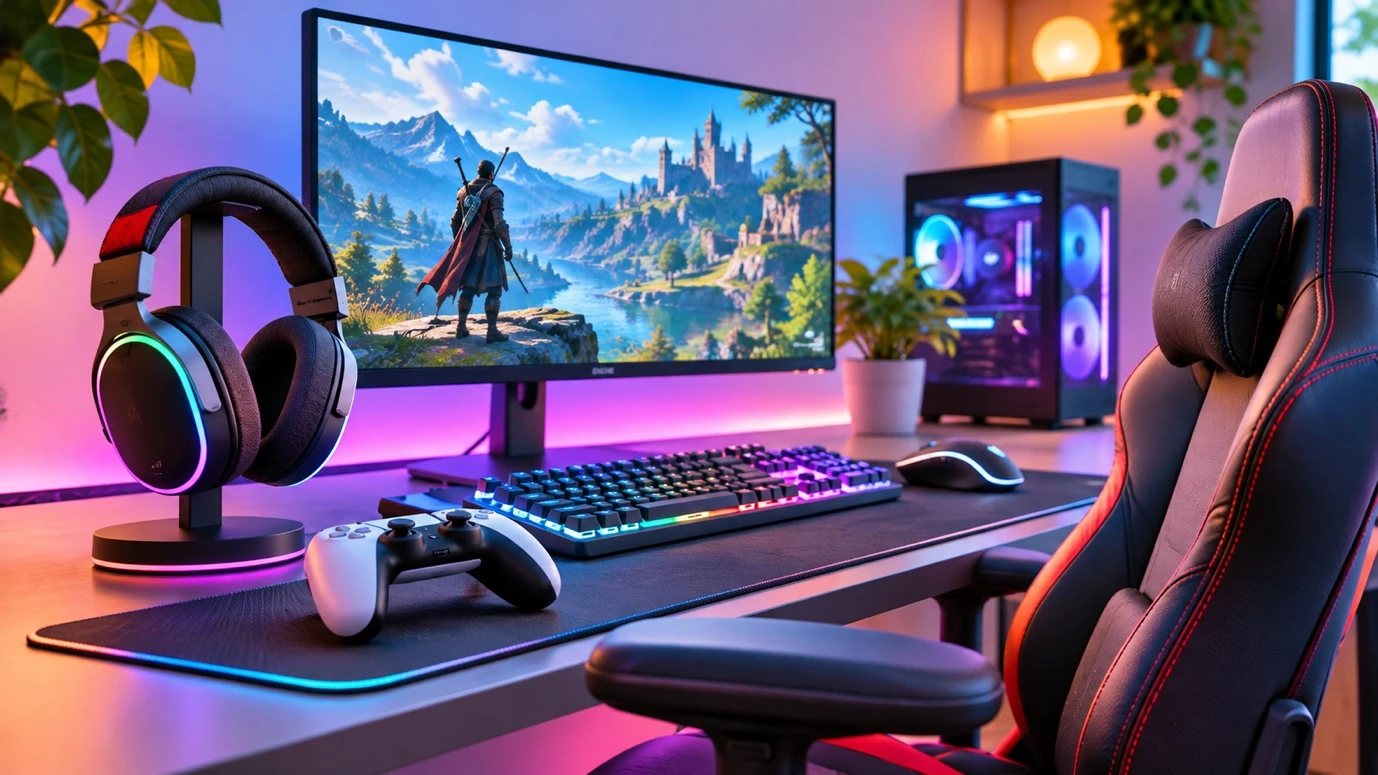
A monitor positioned at the wrong height can make a long session uncomfortable regardless of how expensive the GPU is. The same goes for a heavy headset, a mouse that does not suit someone’s grip or a chair that offers little support.
These upgrades are not exciting in benchmark charts, but players feel them every time they sit down.
That is why modern gaming setups increasingly include adjustable monitor arms, lighter mice, softer ear cushions, wrist support and chairs chosen for posture rather than appearance.
GadgetFreeks has previously looked at how the right gaming gadgets can improve sound, controls, seating and even lighting. None of those upgrades necessarily increase frame rates, yet they can noticeably change how comfortable a setup feels.
PC hardware has reached an awkward middle ground
There is another reason priorities are shifting.
Many mainstream systems are already good enough for the games people actually play.
A player spending most evenings in Fortnite, Valorant, Minecraft or an older RPG may have little reason to replace a capable machine simply because something newer exists.
At the same time, the pace of improvement in some areas no longer feels as dramatic from one generation to the next.
Commentary around recent PC hardware has raised exactly this issue: progress continues, but the practical difference for ordinary users can sometimes feel smaller than the specifications suggest.
That leaves gamers asking a more useful question.
What upgrade would actually make tonight’s session better?
Comfort also means fewer interruptions
Everyday comfort is not only physical.
A controller that lasts through the evening, wireless headphones that reconnect without trouble and a handheld that resumes a game quickly can be more valuable than another theoretical performance boost.
Good hardware gets out of the way.
It does not require constant charging, driver troubleshooting or rearranging cables before someone can play. That is particularly important as gaming becomes something people fit around work, study and family rather than a separate activity reserved for an entire evening.
This also connects with healthier habits. GadgetFreeks’ guide to maintaining a healthy routine points to breaks, time limits and balanced sessions as part of sustainable gaming.
Comfortable equipment cannot replace those habits, but poor equipment certainly makes long sessions harder on the body.
The best setup is becoming more personal
There is no universal gaming setup anymore.
One person wants a high-refresh competitive monitor and an ultralight mouse. Someone else would rather play from a handheld on the sofa. Another gamer cares most about quiet fans, a comfortable chair and headphones that do not squeeze after an hour.
Raw power still has its place.
It just no longer tells the whole story.
Once a system is fast enough, the upgrades people notice most may be the ones that make gaming quieter, easier, more flexible and more comfortable.
And unlike another benchmark score, those improvements are felt every single day.