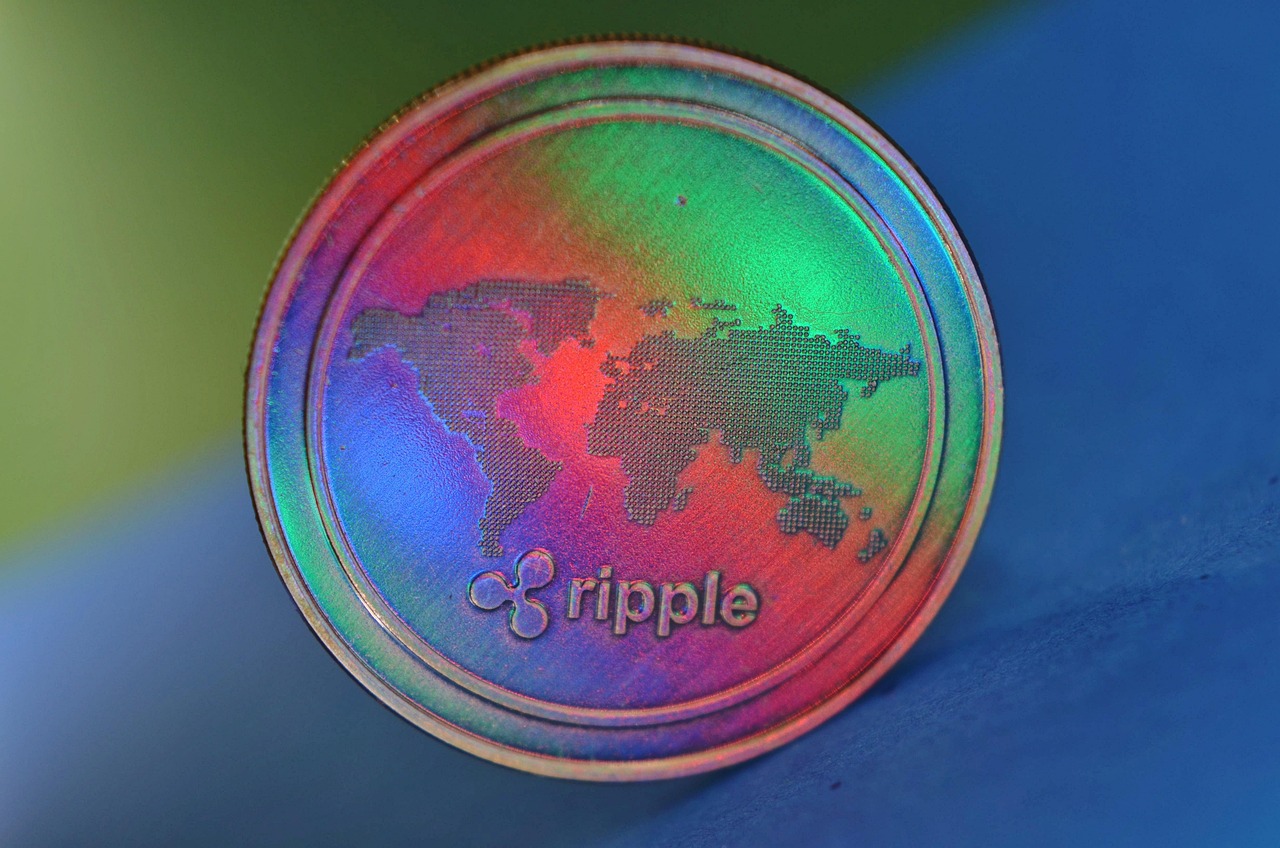
The success of Bitcoin has led to a boost in the number of alternative cryptocurrencies. Developers have been looking into new use cases, consensus mechanisms, and blockchain architectures, driven by the desire to push the boundaries of what’s possible.
In 2011, Jed McCaleb, David Schwartz, and Arthur Britto created XRP to fix Bitcoin’s flaws: slow transaction times, high energy usage, and limited scalability. XRP and Ripple aren’t the same thing. XRP is the native token of the XRP Ledger (XRPL), while Ripple is a FinTech company that offers enterprise blockchain products.
Since XRP has a lower market cap than Bitcoin, it can increase in value over time, bringing in more profit for investors. Before you take a dip, take a moment to reflect on your financial situation; the more intentional you are, the more confident you’ll feel when the waves get bigger and stronger.
The present market value of XRP is expressed in US dollars, which is a common reference for valuing assets, and major crypto exchanges offer XRP to USD trading pairs. Most wallets support XRP tokens. This includes trusted and security-centric hardware wallets and mobile wallets, so the choice ultimately comes down to you.
Price is just one (very visible aspect) of XRP, but it doesn’t tell the whole story. To understand its true worth, consider these 3 key elements.

#1 XRP Redefines Cross-Border Payments
Our world is getting smaller. “Far away” is just a few hours away on a plane or a few time zones away via email or Zoom, which translates into the fact that there are new opportunities to make friends, start new careers, or get more clients. Cross-border payments are used anytime money is sent between parties in different countries.
Switching from one currency to another involves foreign exchange, which adds extra costs and risks since rates constantly shift from day to day. Banks don’t always have direct relationships with one another across borders, so they use intermediaries to get the job done.
With XRP, it takes seconds to move money around the world. If you want to transfer your savings back home, you’ll need the wallet address of a family member to initiate the transfer.
Double-check that it’s accurate because crypto transactions are irreversible, and a small mistake could send your funds to the wrong destination.
You’ll also want to confirm the correct network (the XRP Ledger) to avoid compatibility issues. SWIFT can take days and incur high fees, whereas XRP settles transactions so quickly that it seems to happen right away.
#2 XRP Is A Pivotal Player For Institutional Finance
The SEC decided to drop its case against Ripple after years of litigation to avoid weakening its power over cryptocurrency. In July 2023, Judge Analisa Torres ruled that XRP sales to retail investors weren’t securities. In August 2024, she imposed a $125 million fine on Ripple, much lower compared to the SEC’s original demand of $2 billion.
The SEC received a lot of negative feedback, being accused of targeting companies without offering clear guidelines, and backing off may have been a way to avoid more bad press.
Countless asset managers have filed for XRP ETFs, which just goes to show confidence in its versatility. Some have in view leveraged, derivative-based, or yield-generating XRP funds, but these are riskier, which means they’re designed for short-term trading, not long-term holding, ideal for those looking to achieve quick profit.
In October, the SEC will decide on a batch of spot ETF applications for XRP. Investors can buy XRP exposure through a stock market ticker, just like they would buy Apple (AAPL) or commodity ETFs like SPDR Gold Shares (GLD). Each XRP ETF will have its own unique ticker, making it easy to track and trade on platforms like Nasdaq or NYSE.
Big institutions use XRP for real business outcomes, especially when it comes to cross-border payments and liquidity management. XRP is basically a shortcut for moving money internationally. Imagine that a bank in the US needs to send $1,000 to a partner in Mexico, who needs pesos.
Instead of holding pesos, it converts dollars to XRP, sends XRP across the XRP Ledger, and the receiving bank converts it to pesos.
XRP is necessary for On-Demand Liquidity (ODL), which solves the problem of nostro/vostro accounts, i.e., the idle funds banks traditionally hold in foreign currencies. A financial institution or payment provider can access liquidity on the spot.
#3 XRP Is Driving The Next Wave Of Innovation
The XRP Ledger gives the green light to tokenization, allowing users to turn real-world assets like money, property, or even art into fungible or non-fungible tokens. For example, instead of wiring money through a bank, you can convert it into a digital token that can be managed and transferred using blockchain technology.
Sologenic tokenizes stocks, ETFs, and commodities, which can be traded globally, instantly, and without the limitations of traditional markets. You can also contribute to liquidity pools and earn rewards, so you can get out of debt or save for a vacation.
XRPL has evolved to include smart contract functionality through hooks and sidechains, bringing about a lightweight, efficient alternative for programmable logic.
Hooks lets developers attach code to accounts that executes automatically before or after transactions, such as saying no to payments from unknown addresses, which helps with regulatory compliance.
Ripple is developing sidechains that link to XRPL, so developers can bring into being complex decentralized applications (dApps) with intricate financial logic, such as those for lending, borrowing, and trading.
The Takeaway
XRP reshapes how value moves across the globe. While market fluctuations get a lot of publicity, especially from the media, the real story lies in its utility: XRP powers near-instant cross-border transactions, unlocks liquidity, and opens the door for tokenized assets.
Institutions use XRP as their currency for fast, low-cost transfers that eliminate the need to pre-fund foreign accounts. So, whether you’re an investor, builder, or curious observer, XRP’s impact goes far beyond its market value. If you hold XRP directly, be sure to use secure wallets and avoid phishing scams that run rampant.