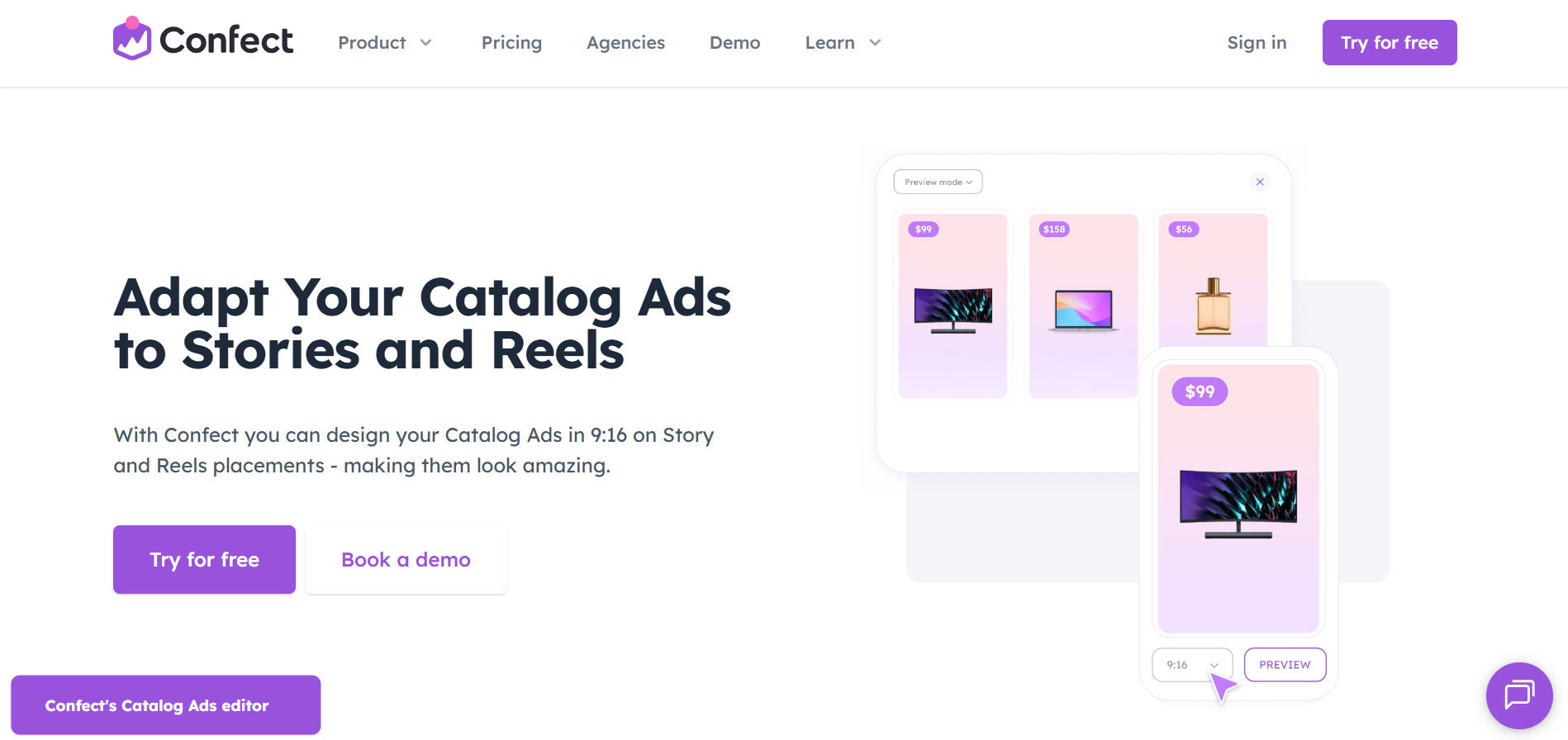
Modern shoppers live in vertical feeds where attention is won in seconds. With Confect you can use stories to showcase your product catalog and turn quick swipes into product discovery at scale.
Story catalog ads combine the immediacy of story formats with the depth of a product feed. Instead of a single static creative, you deliver a sequence of auto-generated story cards that highlight real items with up-to-date price, availability, and imagery.
The result is a shopping experience that feels native, fast, and personal, while still benefiting from your existing catalog, pixel signals, and audience targeting.
Why story formats outperform?
Stories are full screen and motion led, which makes product details harder to miss. Each card puts a single item in focus, reducing cognitive load and giving viewers a clear action.
When powered by your catalog, this format can reflect current bestsellers, new arrivals, or seasonal collections without manual design work. You keep creative freshness high and production time low, a powerful combination for performance teams that iterate weekly.
Creative principles that convert
Lead with clarity. Your first card should introduce the collection with a recognizable visual theme and a concise value message such as free shipping, limited drop, or member pricing. Follow with three to six product cards that show the item, price, and a clear call to swipe up or tap.
Maintain consistent typography and layout across the sequence so viewers recognize your brand while scanning. Use movement sparingly to guide attention rather than distract, and reserve one card for social proof such as ratings or a quick UGC clip to build trust before the final call to action.

Feed strategy and targeting
Segment your catalog by intent and context. For prospecting, showcase broad appeal items and stable price points that introduce your brand. For retargeting, mirror the shopper’s recent browsing with dynamic sets and emphasize urgency, such as low stock or price drops.
Align placements with moments that match your category for example evening leisure for fashion or weekend mornings for home improvement. Refresh creative rules on a schedule so the system pulls in new products as inventory and demand shift.
Measurement that matters
Optimize to a blended view of success. Track swipe-through rate to judge storytelling, product-view rate to confirm relevance, and add-to-cart to validate commercial intent. Compare assisted revenue windows to capture the halo effect on search and direct traffic.
Use holdout tests when possible to quantify incremental lift, then roll learnings back into your feed groupings, bid caps, and frequency thresholds.
From test to scale
Start with one collection and a simple sequence, validate your baseline, then expand to additional categories and seasonal edits. Automate production so you can publish new story sets without rebuilding assets, and standardize naming to keep reporting clean.
When the creative engine runs on your catalog, you compound small wins across dozens of products and weeks of iterations. That is how story catalog ads turn a fleeting glance into lasting growth.