

People think that visuals make a game exciting and enjoyable. Without the effects and animation, the story loses its weight, and the win doesn’t feel as satisfying as it should. But there’s something else that transforms games and excites players: sound.
Sound helps players process information more quickly. You’ll hear shuffling in the background or a slight change in the environment before anything even appears on screen.
It’s the same with online casino environments featured on platforms like BonusFinder. The sounds can help you identify if and when the changes occur, guiding you through each gaming session.
Audio as Competitive Information
You see it happen often: players adjusting graphics settings, comparing refresh rates, and debating lag and response times. These adjustments in a game’s visuals allow them to learn new information as they play.
This can also happen with audio.
Your brain responds quickly to auditory cues in controlled conditions, allowing you to make decisions when you hear even the faintest sounds.
And this is why you’ll hear everyday sounds in games: footsteps on different surfaces, metal clanking, or thuds from falling objects. Players will use these sounds to connect patterns and make strategies to win.
To use game SFX effectively, players tune their headsets. Because many models boost bass, you can’t hear midrange frequencies, and it’s where the most gameplay information sits. As the sounds overlap and blend, you’ll likely lose important cues, making winning difficult.
However, today’s games are loud, filled with chaotic fights full of gunfire, swordfights, and voice calls. How would you compensate? Do you have to sacrifice your hearing just to listen to the game’s sound?
This is why quality headsets are an important part of your gaming gear. Poor models merge layers and sounds into noise, making listening unbearable. Better models, on the other hand, keep the sounds distinct, allowing you to spot even the faintest cue.
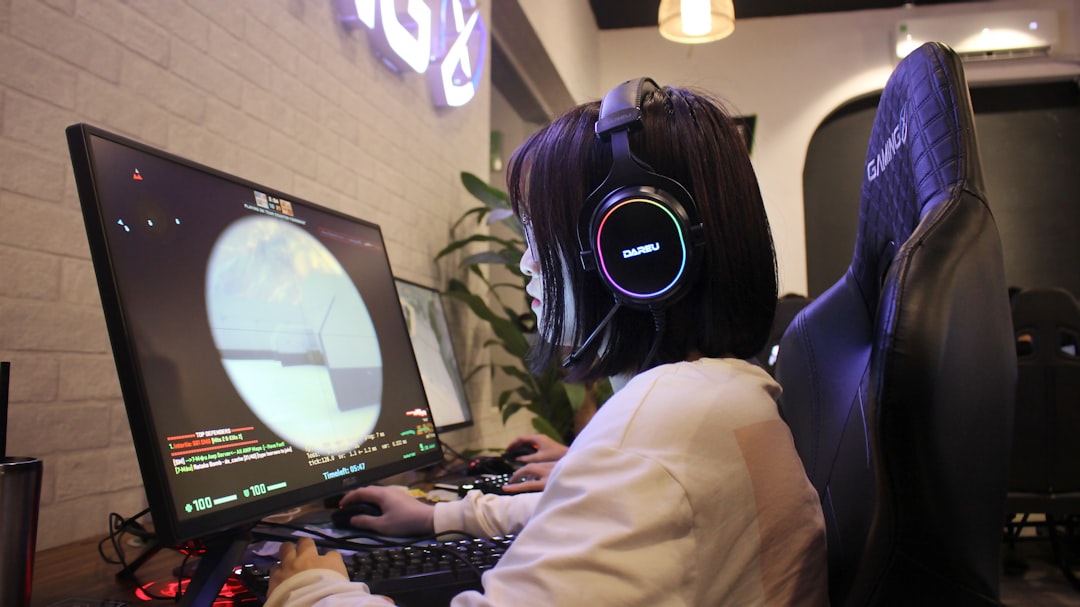
Image: Gamer wearing headset for a gaming session | Fredrick Tendong via
For example, headsets with deep bass boost might be great for music, but they’re quite difficult to use for gaming. The sounds muddle, reducing your in-game precision. And while equalization software can adjust tonal balance, it can’t overcome hardware limitations.
Latency and Synchronization
These days, wireless headsets are the norm, even for players. However, you still need to take the connection type into account.
Many wireless headsets use standard Bluetooth, which can have higher latency than dedicated 2.4 GHz wireless systems designed for gaming.
These delays are crucial in determining the outcome of your game. Why?
Let’s say a game moves 60 frames per second. Each frame lasts about 16 milliseconds. A 100-millisecond delay equals 6 frames, which is already enough to identify who fires first.
And when the audio trails the image, you’ll notice the game’s out of sync, making your brain work harder to align sight and sound.
When the game’s audio and video are synced, you can feel the characters’ actions are more direct, allowing you to react more confidently because your perception and response connect more smoothly.
Direction, Communication, and Comfort
Stereo handles left-right positioning well, but many games rely on vertical cues and depth cues. Software such as Dolby Atmos for Headphones and DTS Headphone X simulate three-dimensional space. These tools work best when the base signal remains clear. If the source lacks definition, additional processing can blur direction rather than sharpen it.
Audio quality also affects voice communication. A distorted microphone forces teammates to ask for repeats, disrupting timing. Clear transmission supports faster coordination and steadier decision-making.
Image: Gamer playing with teammates and speaking | ELLA DON via
Comfort plays a role in longer sessions. Headset weight, clamping force, and ear pad material influence focus. If a headset presses too tightly or traps heat, players repeatedly adjust it. Those small distractions accumulate and compete with concentration.
Sound Design in Online Casino Platforms
Online casino games rely on structured sound design to guide players through each stage. Slot titles use distinct tones to signal feature activation.
Digital table games recreate the sound of chips stacking or cards sliding across felt. These cues help players follow transitions without having to scan the entire screen.
User experience research consistently identifies audio feedback as an important part of interactive systems. Sound marks state changes and reinforces user input.
In casino environments, game mechanics and random number generators determine results. Audio shapes how clearly players interpret those results and how smoothly the session unfolds.
Across competitive shooters and casino platforms, sound communicates timing and change. It supports awareness in ways visuals alone cannot.
Players analyze aim routines and compare hardware specifications. Audio often receives less attention, even though it influences reaction speed and decision-making.
No headset replaces practice or strategy. Mechanical skill remains central. Clear, well-synchronized audio narrows the gap between noticing a cue and acting on it. In close contests, that narrow margin often determines the outcome.
The next time a lost round feels confusing, review more than your crosshair placement. Raise the volume and listen carefully. The explanation may sit in a detail you heard but did not process in time.
