

A business runs smoothly when technology follows a clear plan. An IT strategy sets that plan. It defines how tools, systems, and people support growth.
Without structure, tech spending spreads thin and results stay random. Knowing why IT strategy is important helps leaders connect investment to outcomes and keep control over direction.
What is IT Strategy?
What is an IT strategy comes down to one idea. It’s a practical roadmap that ties technology to goals. It lists how systems should evolve, what they cost, and who owns each part.
A good strategy tells teams where to focus first and what can wait. It keeps budgets realistic and decisions consistent across departments.
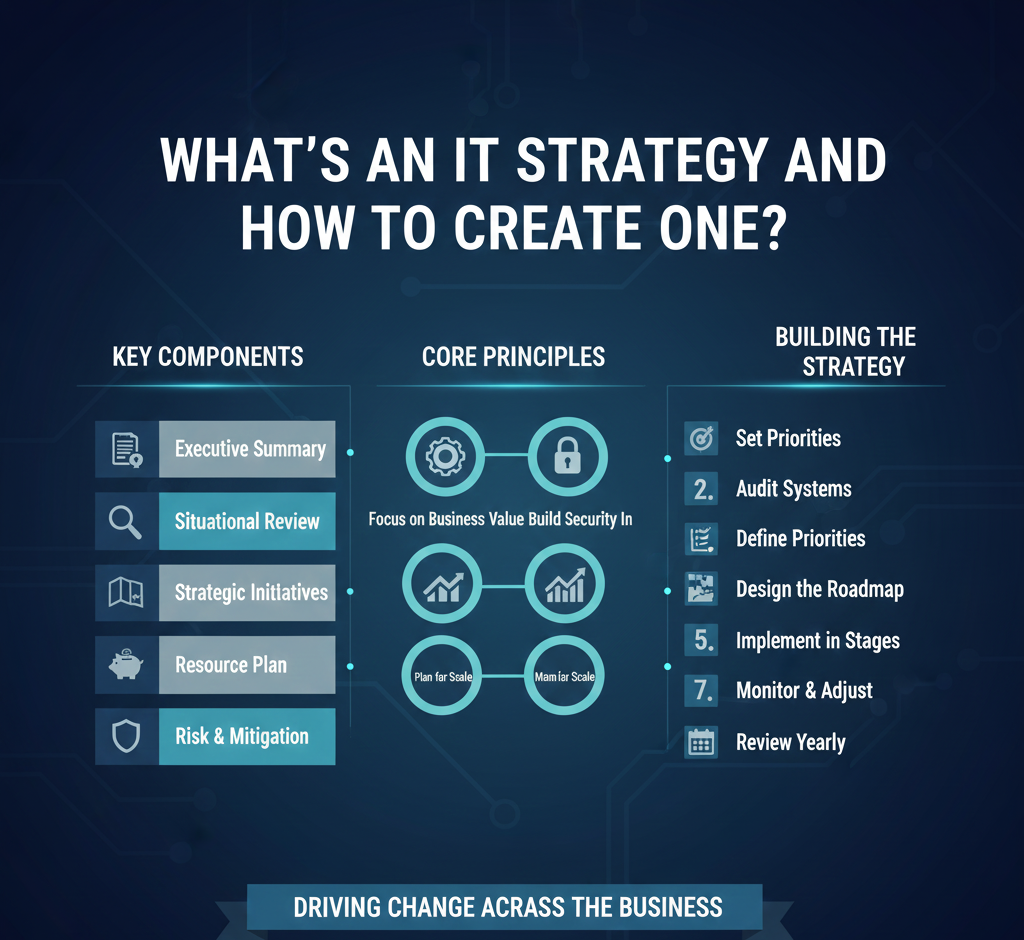
Key Components of an IT Strategy
- Executive summary. A short section that explains the goal of the IT strategy. It summarizes key initiatives, expected value, and next steps. The idea is simple. It gives leaders enough context to act without reading the full document.
- Situational review. Where the company stands today. It covers infrastructure, software, and network capacity, along with team capabilities. The review highlights what works and what doesn’t. Metrics show how efficient the current setup really is.
- Strategic initiatives. Here, the plan becomes actionable. It lists the main projects that support long-term business goals and defines how they connect to measurable outcomes. Each initiative includes scope, milestones, and resource needs. The technology roadmap lives here too, showing when new tools arrive and when outdated ones retire.
- Resource plan. This section breaks down what’s required to execute the roadmap. It links people, budgets, and tools to specific stages. It shows how to create an IT strategy that stays realistic and achievable.
- Risk and mitigation. Every plan faces uncertainty. This element names the main risks like integration gaps, technical debt, and data issues, and explains how to keep them under control. The focus stays on early prevention, not late recovery.
When teams lack internal capacity, partnering with experienced IT consultancy services helps create structured documentation, align it with business goals, and ensure the strategy is actionable from day one.
Core Principles of an IT Strategy
- Focus on business value. Technology is a tool, not a goal.
- Keep it simple. Fewer systems mean fewer delays.
- Build security in. Protect data before problems appear.
- Plan for scale. Growth shouldn’t break your setup.
- Measure results. Use uptime, cost ratio, or delivery speed — whichever shows real impact.
Building the Strategy
To make the plan real, follow this sequence:
- Set priorities. Start with the company’s goals: higher efficiency, lower cost, or better customer experience.
- Audit systems. List hardware, software, and processes. Identify what works.
- Define priorities. Rank projects by impact and urgency. Decide where to invest first.
- Design the roadmap. Outline each step. Set timelines, budgets, and owners. This is the base for teams to follow.
- Allocate resources. Match skills and tools to planned projects. Fill gaps early through hiring or outsourcing.
- Implement in stages. Launch one domain at a time to avoid disruption.
- Monitor and adjust. Track performance. Regular updates show how to create an IT strategy that stays relevant as priorities shift.
- Review yearly. Refresh objectives and budgets. Continuous review prevents stagnation and keeps IT aligned with business direction.
Practical Outcome
A strong strategy gives leaders clarity and teams direction. Everyone understands priorities and how success will be measured. Costs stay predictable, risks shrink, and projects move faster because the framework is simple and transparent.
In real work, how to develop an IT strategy isn’t about writing documents but about following them. When every decision connects back to the plan, IT stops reacting to problems and starts driving change across the business.
