It’s no wonder that the gaming industry is considered one of the fastest-growing industries, as over the past four decades, home technology has evolved from basic devices to dynamic ecosystems. What started as bulky consoles with little functionality and few games has evolved into compact, silent devices and cloud-based solutions that redefine what gaming is.
This technological evolution has changed the everyday experience of players, and now everyone can become a player. In this article, we’ll take you through the evolution of home tech, focusing on video game development, cloud computing, and technology.
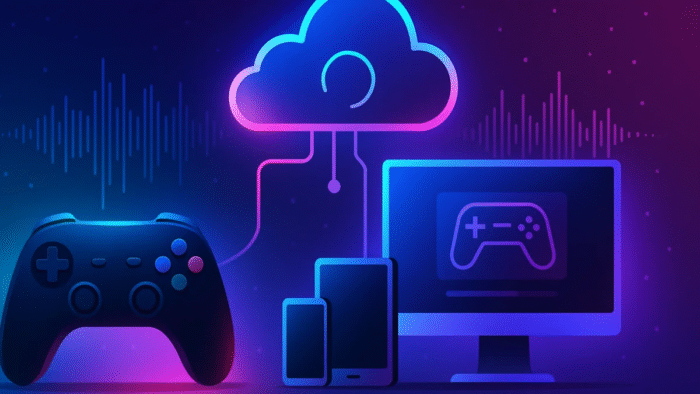

The Console Era: Foundations of Interactive Entertainment
The late 1970s and the entire period of the 1980s marked the beginning of the era of consumer electronics in the entertainment industry. It was then that game consoles such as the Atari 2600 and Nintendo Entertainment System (NES) were introduced, bringing interactive experiences to home living rooms for the first time.
These devices operated autonomously, used physical cartridges and connected to televisions with kinescopes, opening up a new, albeit technically limited, but breakthrough way for users to interact with games.
The 1990s and early 2000s saw a real breakthrough in technology. Back then, consoles became more advanced, supporting better graphics and more games. They were still far from reaching the level of platforms like dota live score, but the progress was already noticeable.
Consoles such as Sony’s PlayStation and Microsoft’s Xbox were the first to introduce three-dimensional graphics, CDs, and Internet connectivity. This made it possible to make the gameplay more home-based and independent of going to computer clubs.
Games such as CS, Halo or Dota started to gain popularity and redefine what games should be. Players already had real-time feedback and could track esports matches and tournaments. This contributed to the development of communities and the development of new games and esports.
Integration and Smart Living: The Rise of Connected Devices
In the second half of the 2000s, the emergence of smartphones and Wi-Fi routers significantly changed the way we think about ‘smart connected living’. Since then, the digital experience within the living room has ceased to be centred on a single device. Smart TVs, tablets, and voice assistants began to interact with each other, creating a single system for entertainment and everyday needs.
The development also affected game consoles. The Xbox One and PlayStation 4 models have effectively blurred the lines between traditional consoles and personal computers, offering video streaming, cross-platform communication, and cloud storage.
Meanwhile, services such as Steam and the Epic Games Store have significantly accelerated the gaming industry’s shift to digital libraries, displacing the need for physical media.
The development was also noticeable in other areas, including household appliances. This was manifested in the creation of smart thermostats, lighting systems, and kitchen appliances. This has made it easier for people to watch dota tournaments and go about their daily routine.
Companies such as Amazon and Google are at the forefront of developing such technologies and trying to improve aspects of home life. Regardless of whether you are an internet user or not, you will agree that it is much more convenient to regulate the temperature at home with the help of technology.

Streaming and the Cloud: Hardware Becomes Optional
The current phase of home tech evolution is defined by the cloud. Services like NVIDIA GeForce NOW, Xbox Cloud Gaming, and PlayStation Plus Premium eliminate the need for expensive gaming hardware, allowing high-fidelity games to be streamed directly to devices like smartphones or smart TVs.
Cloud technologies are not just for gamers. Services such as Netflix, Spotify, and Apple TV have fundamentally changed the way we consume media, eliminating the need for local storage.
Thanks to cloud-based solutions, modern homes can become lightweight, mobil,e and adaptable: a $100 Chromecast device combined with a high-quality internet connection can provide a level of entertainment that previously required expensive equipment worth more than $1,000.
The implications for the gaming industry and esports are equally significant. Watching matches is now much more convenient, as they are now hosted on servers with perfect frame accuracy and viewers can watch tournaments in real time. As users move towards subscription-based cloud gaming, access to their favourite titles and new releases is becoming easier and easier.
Real-Time Responsiveness and the Future of Immersive Home Tech
The future of home technology is being shaped by artificial intelligence, real-time responsiveness, and immersive experiences. Devices are learning user preferences to optimize settings automatically—from adjusting audio profiles during gaming to optimizing lighting for concentration or relaxation.
Virtual reality (VR) and augmented reality (AR) technologies are gradually becoming commonplace elements of modern life. Devices such as Meta Quest 3 and Apple Vision Pro integrate spatial computing into the home by combining physical reality with digital elements in real time.
For such solutions to function properly, they require powerful data processing and near-instantaneous information transfer, which can only be achieved through high-tech cloud infrastructures and high-speed fibre optic connections.
The same applies to game analytics, especially in esports disciplines. Taking Dota 2 as an example, the importance of technology is growing, as tournaments integrate systems that analyse all statistical data, offer real-time breakdowns of action, and provide comparisons to professional players.
This makes match analysis easier and helps professional teams prepare for tournaments better. Moreover, such tools are available to all players, so you can test it at home.
Conclusion
In this article, we’ve told you the story of home gaming, from old consoles to cloud computing and eSports. This can be called the development of technology, intelligence and flexibility in the gaming industry. Over the past decades, players have witnessed a transition that has changed the way they interact with games, media and information in their personal space.
Games have become a true driver of evolution, blurring the boundaries of hardware and software and making it accessible to all. As hardware fades into the background and cloud computing becomes the norm, the home will no longer just house technology – it will become technology.