You’ve probably noticed how your favorite streaming service seems to predict your next choice before you even scroll – that’s the work of sophisticated algorithms trained to study viewing habits, timing and engagement depth.
Modern AI systems now go beyond simple recommendations, understanding behavioral nuance: why you linger on certain titles, skip others or finish entire seasons in one sitting. Recent research shows that AI-driven content personalization can boost viewer engagement by up to 40% on streaming platforms.
This kind of deep learning has turned entertainment discovery into a personalized experience that unwinds as you do. Analysts in 2026 note that recommendation engines have begun incorporating emotional mapping and contextual triggers to predict user interest with higher precision.
That means your feed reflects how you interact. As a result, the digital entertainment terrain is about tailoring every frame, beat and interaction to align with your unique patterns.
Immersive interfaces and real-time experiences
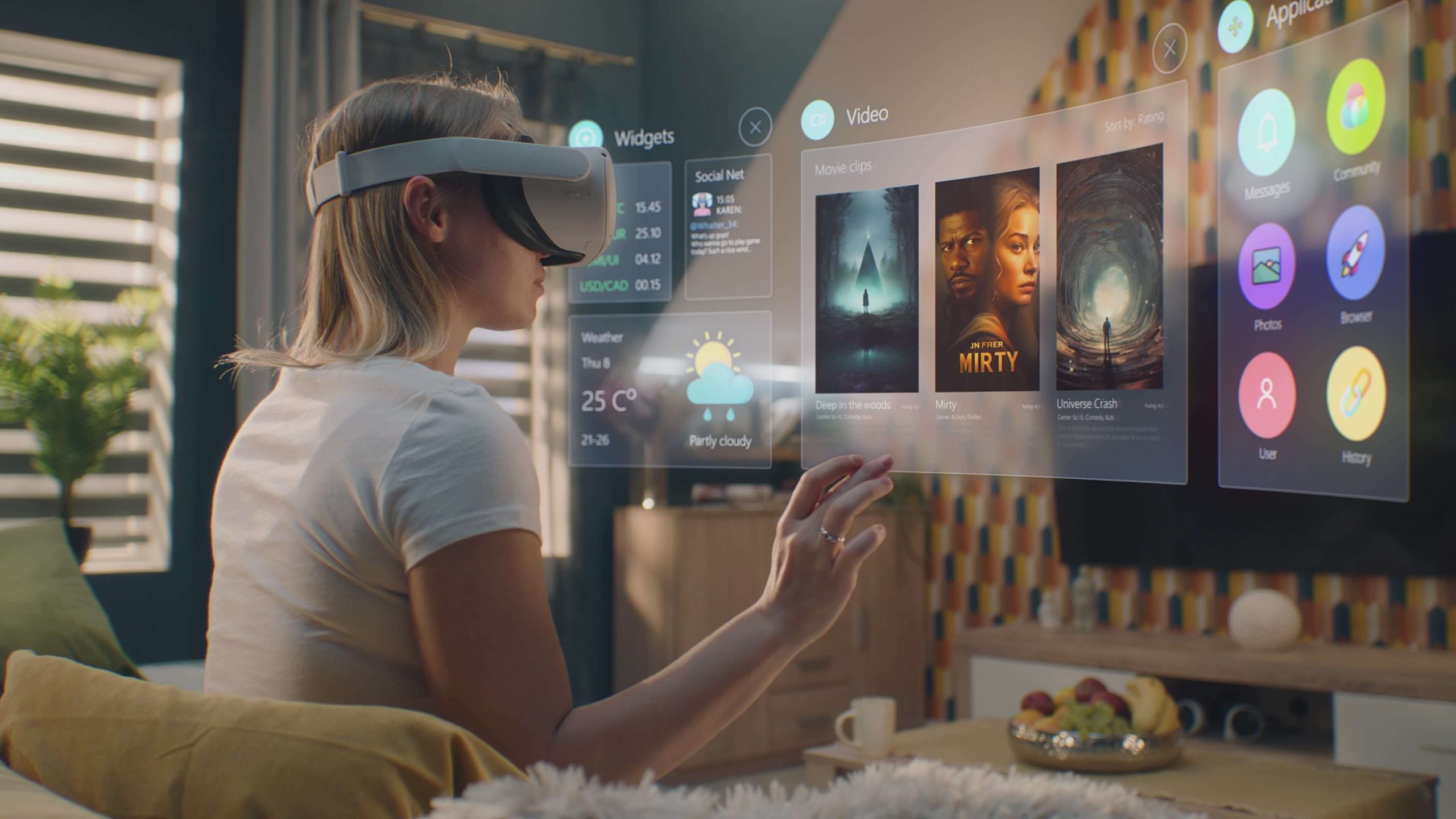
Entertainment is shifting from something you watch to something you participate in. High-speed 5G networks, edge computing and powerful consumer devices have brought immersive formats into everyday life. You can now step into virtual concerts, attend film premieres in augmented reality or interact with live sports events through dynamic data overlays.
Some venues are even experimenting with spatial audio and 8K visuals streamed directly to home devices, blurring the boundary between physical and digital attendance.
Meanwhile, real-time technologies now allow creators to merge live performance with interactive media, letting you choose camera angles, interact with characters or vote on plot directions.
Behind these seamless experiences is a vast infrastructure of low-latency streaming protocols and adaptive playback systems that synchronize thousands of concurrent users at once. Thus, the entertainment space is becoming participatory at its core, making you part of the story unfolding on screen.

Secure transactions, blockchain and gaming convergence
As entertainment expands, trust and security have become defining features of next-generation platforms. Blockchain and encrypted verification systems now handle digital rights, user identities and micropayments across streaming and gaming services.
This technology eliminates fraud and ensures transparent royalty flows between creators, developers and audiences. Gaming and entertainment are also converging faster than ever, with cloud platforms now streaming both video and games from a single interface, allowing progress, purchases and preferences to travel with you across devices.
With advanced encryption, seamless mobile access and intuitive interfaces, platforms like Lunarspins showcases how innovation continues to push the boundaries of online entertainment. Its hybrid model demonstrates how content, community and commerce can coexist securely in one unified environment.
Elsewhere, subscription gaming platforms are expanding libraries to include classic and indie titles that stream instantly on mobile, PC or console.
The way you consume entertainment, between watching, playing or engaging, is now built on a secure, scalable and connected infrastructure that adapts to your habits in real time.
Content delivery networks and performance optimization
Every time you hit play and a video loads instantly, an intricate network of delivery systems activates in the background. Adaptive bitrate streaming now anticipates connection fluctuations, seamlessly adjusting quality to maintain clarity without interruption.
Meanwhile, content delivery networks (or CDNs) have developed to bring data closer to users through edge servers positioned worldwide, dramatically reducing latency and buffering while supporting millions of simultaneous viewers.
For live events such as sports tournaments or concert broadcasts, platforms now use concurrency-aware infrastructure that distributes demand intelligently across multiple nodes. Advertising, too, has adapted, where real-time insertion allows for region-specific promotions that appear without affecting playback.
The result is an almost invisible layer of optimization that makes streaming feel effortless: you experience uninterrupted quality even during global premieres or high-traffic events, all powered by intelligent systems predicting and balancing network behavior before problems appear.
Creation tools, generative production and new storytelling formats
Technology is reinvigorating the creative side of entertainment just as much as the viewing experience. Generative production tools powered by machine learning now assist writers, animators and musicians in creating complex projects at unprecedented speed.
Equally, cloud-based editing suites and real-time rendering engines allow teams across continents to collaborate simultaneously. This has opened the door to innovative story formats: interactive films, branching narratives and mixed-media experiences that invite you to influence the outcome.
At the same time, short-form, vertical video storytelling has surged, reaching audiences who prefer mobile-first engagement and fast-paced creativity. Meanwhile, production timelines have also shortened dramatically; entire seasons can be rendered, edited and localized in a fraction of the time it once required.
As these tools become more accessible, independent creators are finding their way into mainstream visibility, diversifying what you see and hear. Today, entertainment is driven by ideas, communities and accessible technology that turns anyone with a vision into a potential storyteller.
The evolution of engagement
Behind every modern entertainment platform lies one guiding principle: connection. No matter if it’s a personalized streaming recommendation, a virtual concert with real-time interaction or a secure gaming environment built on decentralized tech, the aim is to make your engagement effortless and meaningful.
The focus has shifted from broadcasting to listening, with platforms learning from user behavior, adapting content pipelines and responding to shifts in audience mood and demand.
As streaming, gaming and digital storytelling continue to merge, your experience becomes more fluid across formats and devices. The entertainment of tomorrow is now defined by how naturally you move within it; each click, pause and reaction contributes to a feedback loop that refines the experience continuously.
The result is an ecosystem that learns, develops and grows smarter with every interaction in an ongoing conversation between technology and the human desire for discovery.
Key Takeaways
The next generation of entertainment platforms reflects a remarkable balance between personalization, immersion and innovation: artificial intelligence drives a deeper understanding of your preferences; real-time infrastructure transforms viewing into participation; secure systems make transactions and identity protection seamless.
Equally, advanced delivery networks eliminate friction, while creative tools democratize storytelling itself. Together, these forces redefine what entertainment means in 2026 and beyond.
Ergo, you’re driving content, influencing it and existing within it; the smarter these systems become, the more dynamic and human your digital experiences feel.